
Climbing injuries and repetitive strain
By Amy Beanland
Whether you're new to climbing or projecting your next grade, sore fingers, elbows or shoulders can sometimes become part of the journey. Most climbing injuries are rarely just "one tissue is damaged"—they're often the result of training load + movement strategy + recovery + biomechanics contributing to the picture.
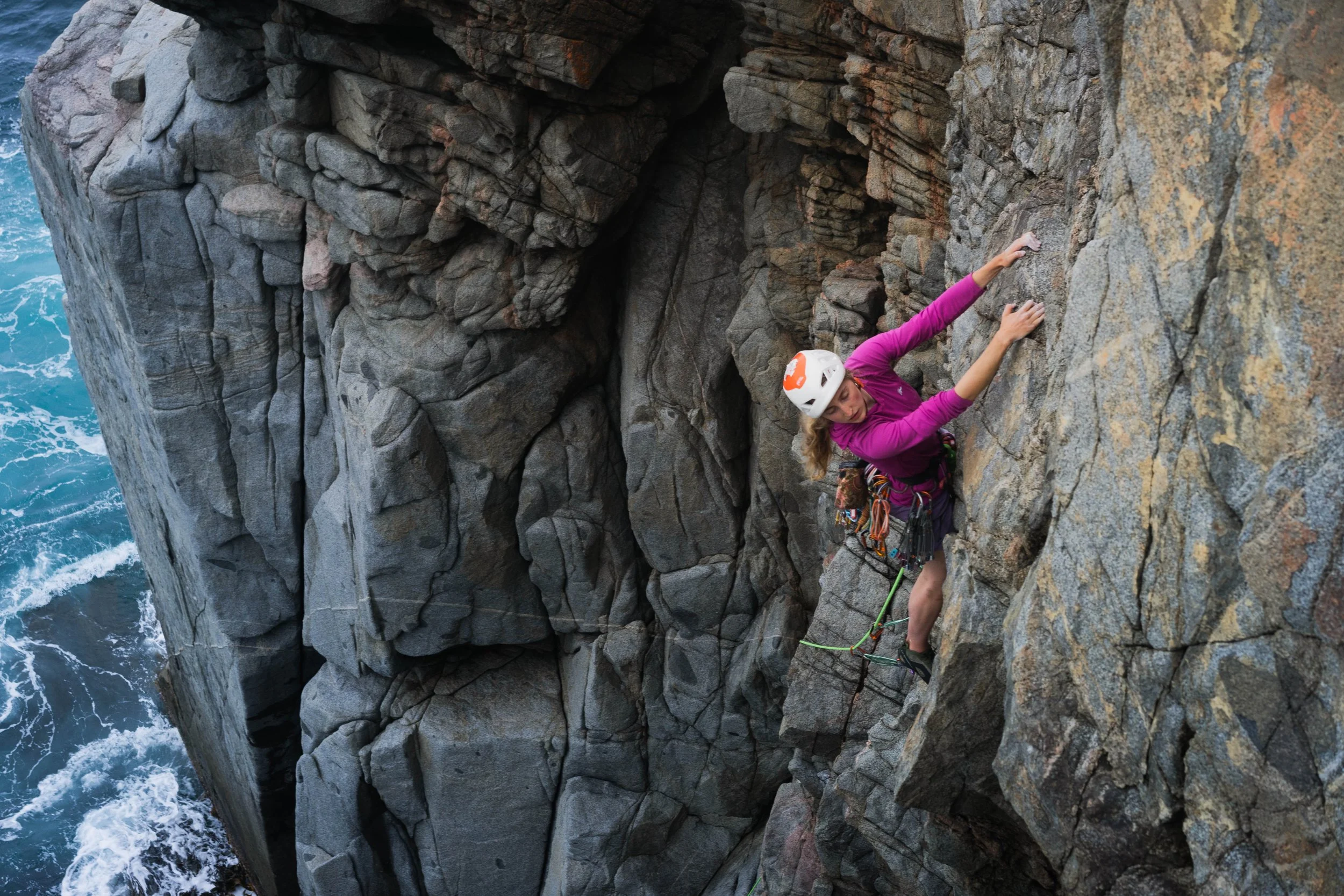
Climbing on the beautiful and exposed, ‘Beowolf’. Freycinet TAS.
What is a repetitive strain injury?
A repetitive strain injury or overuse injuries develops when a tissue is exposed to repeated load without enough time to recover and adapt. Over time this can lead to pain, stiffness, swelling, reduced strength or decreased performance.
These injuries aren't unique to climbing—they can occur from work, hobbies, parenting or household tasks. Climbing simply places particularly high demands on the fingers, wrists, elbows and shoulders through repeated gripping, pulling and sustained loading.
Repetitive strain injuries commonly occur when there has been a change in load, such as:
Increasing climbing sessions from once to three times per week.
Climbing harder grades or spending more time on steep terrain.
Introducing hangboard or campus board training too quickly.
A sudden increase in training intensity or volume.
Technique or movement habits that repeatedly overload particular tissues.
Life stressors such as poor sleep, physically demanding work or caring for young children, which may reduce your body's ability to recover.
Our bodies are incredibly adaptable, however they need time to build strength and resilience.
Common climbing injuries we see:
Different climbing styles place different demands on the body. For example, bouldering often involves more powerful, dynamic movements and harder falls, whereas sport or trad climbers may be more likely to subject tissues to sustained repetitive loading.
Finger pulley injuries
Often caused by forceful crimping or dynamic loading.
Symptoms: A sudden sharp pain or "pop", pain when crimping, swelling and reduced grip strength.
Finger flexor tenosynovitis
Irritation of the tendon sheath from repetitive gripping.
Symptoms: Gradually increasing finger pain, swelling near the base of the finger, stiffness (often worse in the morning).
Finger joint capsulitis
Irritation of the finger joint capsule from repeated loading.
Symptoms: Aching around the finger joint, swelling and pain at the end of bending or straightening the finger.
Golfer's elbow (Medial epicondylitis)
A common overuse injury from repetitive gripping and pulling.
Symptoms: Pain on the inside of the elbow, tenderness and reduced grip endurance.
Tennis elbow (Lateral epicondylitis)
Less common in climbers but can develop with changes in training load.
Symptoms: Pain on the outside of the elbow, aching with gripping or lifting.
Shoulder injuries (Rotator cuff, impingement & SLAP tear)
Often related to repeated overhead loading, lock-offs and dynamic movements.
Symptoms: Pain reaching overhead or locking off, weakness, clicking or feelings of instability.
Wrist injuries and pain: Common with mantles, compression climbing and dynamic moves.
How can osteopathy help?
Treatment addresses much more than just the painful area. We consider your climbing history, recent training load, work demands, recovery, movement patterns and overall lifestyle to understand why the injury developed in the first place.
Treatment may include:
Manual therapy to reduce pain, improve joint and soft tissue mobility, and make movement more comfortable.
Addressing compensatory mechanics that may contribute to pain and biomechnical patterns
Education around appropriate load management
Individualised rehabilitation exercises.
Advice on returning to climbing safely.
Guidance on warm-ups, training progression and injury prevention.
Manual therapy isn't a cure on its own—it works best alongside progressive rehabilitation and appropriate loading to help you get back to doing what you love.
When should I seek assessment?
persistent pain beyond 1–2 weeks,
inability to grip normally,
hearing a pop in the finger, significant swelling or bruising,
recurrent pain that keeps returning when climbing
Do I need a scan?
Not always. Many climbing injuries can be diagnosed through a detailed history and physical examination. Imaging may be recommended if there's concern about a significant tendon or ligament injury, symptoms are severe, the diagnosis is unclear or recovery isn't progressing as expected.
If imaging is appropriate, we can discuss this during your appointment and organise with your GP or referring practitioner.
The bottom line
Most climbing injuries aren't simply the result of one move on the wall, more often, they're a sign that the demands placed on the body have temporarily exceeded its ability to recover.
With the right advice, sensible load management and a tailored rehabilitation plan, most climbers recover well and return stronger and more resilient.
If you're dealing with a finger injury, sore elbow, aching shoulder or a persistent climbing niggle, we'd love to help you get back on the wall with confidence.